
Foot Surgery in Pensacola, FL
Foot Surgery Near You
Foot pain can stop you from doing the things you love. Walking, standing, playing with your kids, or just getting through the day — when your feet hurt, everything feels harder. At Gulf Coast Podiatry, we understand that. We offer foot surgery in Pensacola, FL, to help you get back on your feet, literally. Our foot surgery services are designed for people who have tried other treatments but still feel pain or have problems that require surgical correction. We use modern, safe, proven techniques to deliver real results.
If you are looking for foot surgery near you, our team provides safe, professional care focused on relieving pain and restoring healthy movement. Our team consists of professionals who specialize in foot and ankle care. Every surgery we perform is carefully planned, executed with precision, and followed by proper recovery support.
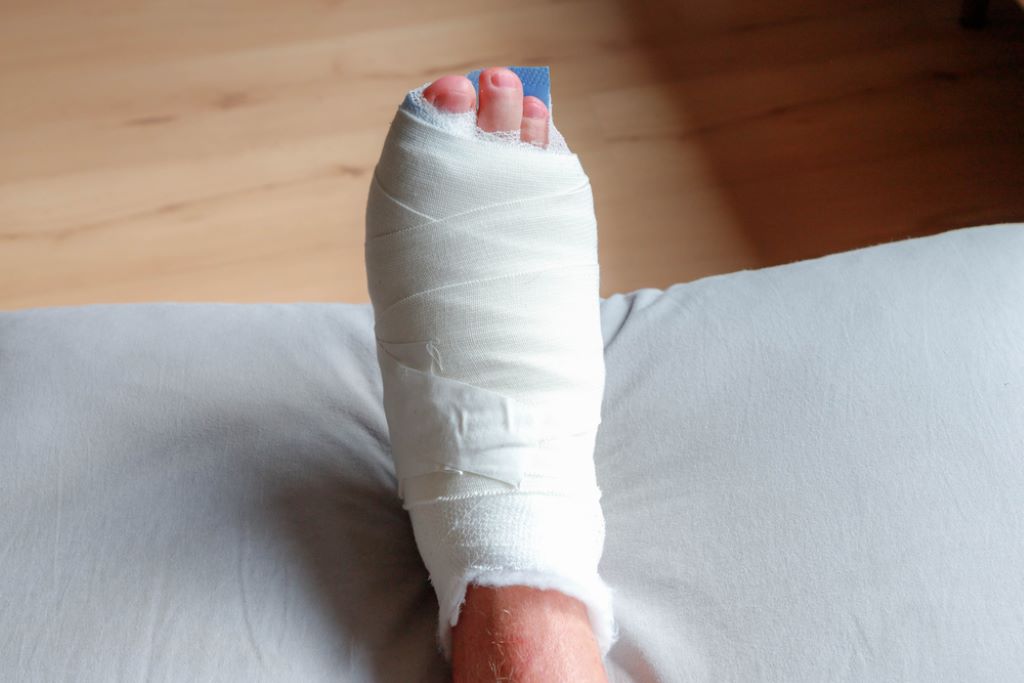
When Is Foot Surgery Recommended?
Surgery is usually not the first step. At Gulf Coast Podiatry, we always begin with conservative treatment. This may include rest, custom orthotics, padding, physical therapy, anti-inflammatory medicine, or steroid injections.
Surgery is recommended when:
Your pain does not improve after months of treatment
The deformity becomes worse over time
Walking becomes difficult
Your nerves are compressed, causing numbness
A fracture is unstable
The problem affects your daily life
For example, if you have a bunion that keeps growing and makes it hard to wear shoes, surgery may be the best option. If you have a neuroma causing burning pain that does not improve with injections, surgery may relieve the pressure on the nerve.
Our podiatrist near you will examine your foot, take digital X-rays if needed, and explain all options clearly. We make sure you understand the benefits and risks before moving forward.
Procedure Overview: What to Expect
If you choose our office for foot surgery near you, you will come in for the procedure and go home the same day — with no overnight hospital stay needed in most cases. Procedures are typically done under local anesthesia with sedation or regional nerve blocks to keep you comfortable throughout.
During this visit, we go over the exact steps of your procedure, discuss anesthesia, review your medications, and answer all your questions. We will also give you clear instructions on how to prepare — including any fasting requirements and what to arrange for your ride home.
On the day of surgery, our team ensures you feel relaxed and cared for. The operating suite is fully equipped with advanced surgical tools. Depending on the type of procedure, surgery may take anywhere from 30 minutes to a couple of hours. After surgery, you are moved to a recovery area where our nurses monitor you before you are cleared to go home.
We use minimally invasive techniques whenever possible. These approaches involve smaller incisions, which typically lead to less tissue damage, less post-operative pain, and a faster overall recovery than traditional open surgery.
Recovery Expectations
Recovery from foot surgery in Pensacola, FL, varies depending on the procedure. Some patients are walking in a surgical boot within a few days. Others may need to avoid putting weight on their foot for several weeks. We will provide a recovery plan tailored to your procedure and body.
Here is a general idea of what recovery involves:
Keeping the foot elevated for the first several days to reduce swelling
Using crutches, a walker, or a surgical boot as directed
Taking prescribed medications to manage pain and prevent infection
Attending follow-up appointments so we can check your healing progress
Gradual return to regular footwear and activity as healing allows
Physical therapy exercises to restore strength, flexibility, and balance
Most patients can return to light activity within a few weeks, while full recovery — including a return to sports or high-impact exercise — can take 3 to 6 months, depending on the procedure. We track your progress at every step and adjust your care plan as needed.
Foot Surgery Services at Gulf Coast Podiatry
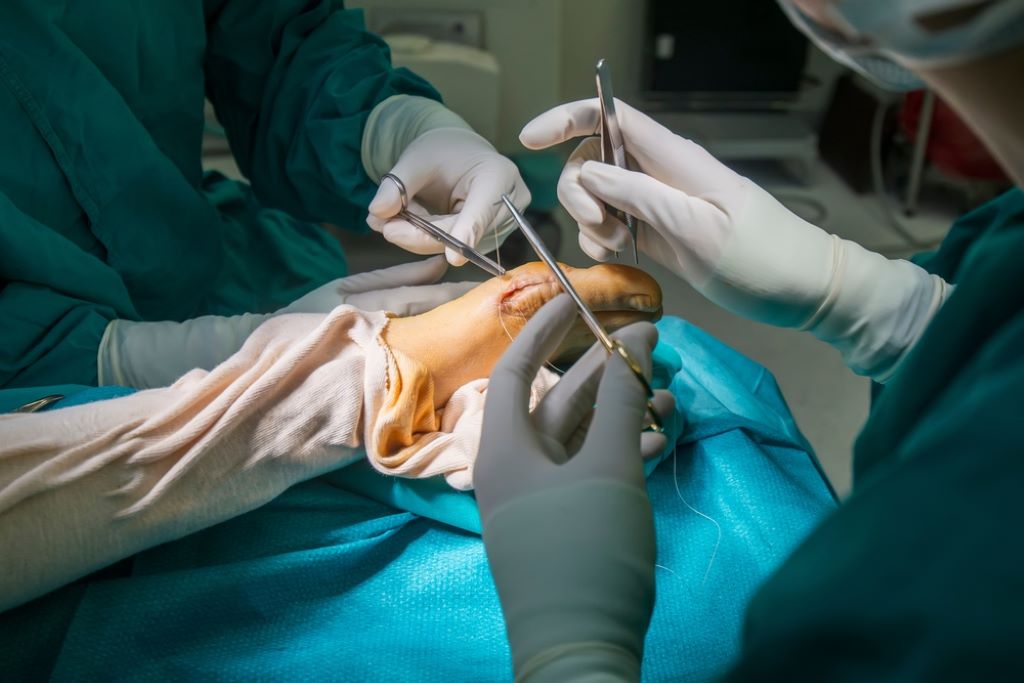
Bunion Surgery
A bunion is a bony bump that forms at the base of the big toe. It happens when the big toe shifts toward the second toe. This causes the joint to stick out. Over time, it can become painful, swollen, and red.
Some people can manage bunions with wider shoes and orthotics. But when pain becomes constant, or the toe moves too far out of place, surgery may be needed.
Bunion surgery is called a bunionectomy. During this procedure, the podiatrist removes the enlarged bone and realigns the toe joint. In some cases, small screws or pins are used to hold the bone in the correct position while it heals.
The goal of bunion surgery is to reduce pain, improve alignment, and allow you to wear shoes comfortably again. Most patients can walk in a surgical boot shortly after surgery.
If your bunion keeps getting worse or affects your daily walking, we can help evaluate your options.

Hammertoe Surgery
A hammertoe happens when one of the smaller toes bends upward at the middle joint. The toe may look curled. This can cause corns, calluses, and pain when wearing shoes.
Hammertoe often starts as flexible but can become rigid over time. When padding, splints, and shoe changes do not help, surgery may be recommended.
During hammertoe surgery, the podiatrist straightens the toe by adjusting tendons or removing part of the bone. In some cases, a small pin is placed temporarily to keep the toe straight during healing.
The procedure is usually quick and done under local anesthesia. Many patients can walk in a surgical shoe the same day.
Correcting a hammertoe can improve comfort and prevent pressure-related skin breakdown. It also helps improve toe alignment and function.
Neuroma Surgery
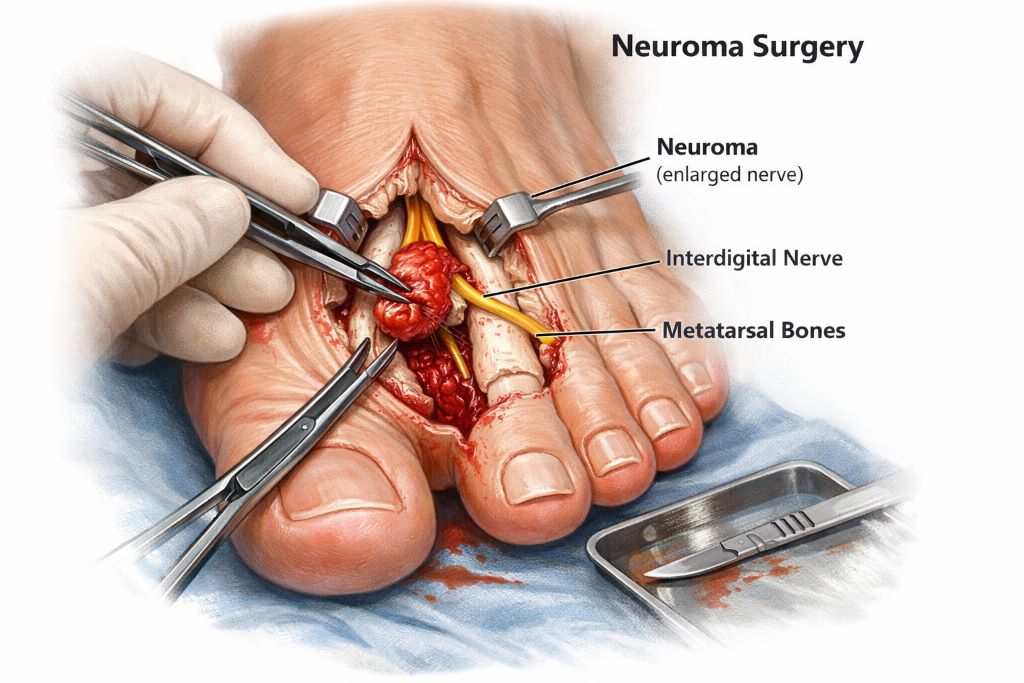
A neuroma is a thickening of nerve tissue, often between the third and fourth toes. It can cause burning pain, tingling, or a feeling of a stone in your shoe.
Neuromas are often treated first with padding, wider shoes, anti-inflammatory medication, or steroid injections. When these treatments do not relieve pain, surgery may be necessary.
Neuroma surgery involves removing the thickened nerve tissue or releasing pressure around the nerve. The procedure is done through a small incision.
After surgery, patients may experience temporary numbness in the area. This is normal because the affected nerve is removed or adjusted.
Many patients feel significant relief from burning pain after healing. If you have nerve pain that continues for months, it is important to get evaluated.
Fracture Repair
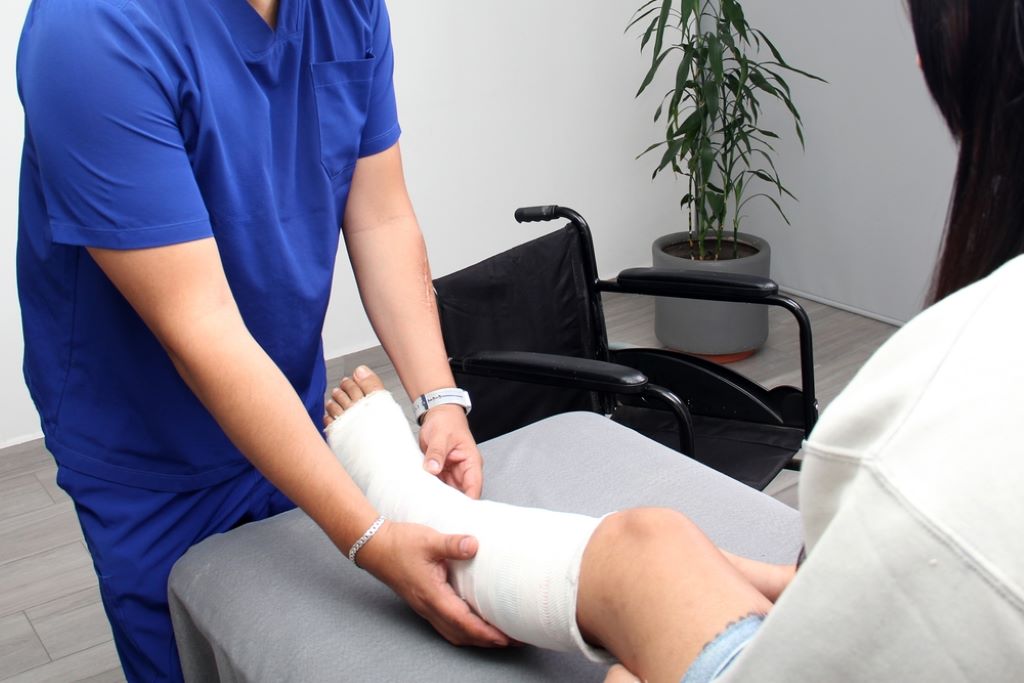
Foot fractures can occur from falls, sports injuries, or accidents. Some fractures heal with casting or a walking boot. However, unstable or displaced fractures may require surgical repair.
Fracture repair surgery involves realigning the broken bone pieces and securing them with screws, plates, or pins. This helps the bone heal in the correct position.
Without proper alignment, a fracture may heal incorrectly. This can lead to long-term pain, arthritis, or walking problems.
After surgery, you may need to avoid putting weight on the foot for several weeks. Follow-up X-rays are used to monitor healing.
Our goal is to restore normal foot structure and function safely. Proper fracture repair helps prevent future complications.

Minor Surgical Procedures
Not all foot surgeries are major. Some minor procedures can be done quickly in the office.
These may include:
- Removal of ingrown toenails
- Drainage of abscesses
- Removal of cysts
- Soft tissue mass removal
- Wart excision
These procedures are typically done under local anesthesia. Healing time is usually short. Most patients return to regular activity within days.
Even minor problems can cause severe discomfort. Treating them early prevents infection and further complications.
At Gulf Coast Podiatry, we focus on safe and sterile techniques to protect your health. Our goal is to provide reliable foot surgery near you so you can heal properly and return to daily life without ongoing pain.
Why Select Gulf Coast Podiatry for Foot Surgery?
Choosing the right podiatrist is important. At Gulf Coast Podiatry, your comfort and long-term foot health are our priority:
- Our podiatrist in Pensacola, FL, is trained in surgical and non-surgical foot treatments.
- We recommend surgery only when it is truly necessary.
- We use digital imaging to plan precise procedures.
- We explain every step in simple language.
- We provide support before and after your procedure.
- We schedule follow-up visits to ensure proper healing and reduce the risk of complications.
Professional Foot Surgery That Restores Movement
If foot pain is limiting your life, do not wait. The sooner a problem is treated, the better the results. Whether you need conservative treatment or surgical correction, Gulf Coast Podiatry is here to help. Our experienced team is ready to guide you with safe, effective treatment focused on long-term relief and healthy movement.
Call our office today at (850) 434-9867 to schedule your consultation for foot surgery in Pensacola, FL, and take the first step toward healthier feet.
FAQ
Is foot surgery painful?
You may feel some discomfort after surgery, but pain is managed with medication and proper care. Most patients say the pain improves within a few days.
Will my insurance cover foot surgery?
Many foot surgeries are covered by health insurance when they are deemed medically necessary. Our billing team will work with your insurance provider to verify your coverage and explain your out-of-pocket costs before you commit to any procedure. We want you to have a full picture of your financial responsibility ahead of time — no surprises.
Can I walk after foot surgery?
This depends on the type of surgery. Some procedures allow you to walk in a surgical boot or shoe almost immediately. Others require that you stay off the foot for a period of time, using crutches or a knee scooter. We will give you specific weight-bearing instructions based on your procedure and your progress during healing.
Are there risks with foot surgery?
All surgeries have some risks, such as infection or swelling. We take careful steps to reduce these risks.
Will I have a scar?
There will be a small scar where the incision was made. We try to keep incisions small whenever possible.
How do I know if I need surgery?
If your foot pain continues despite treatment, or if walking becomes difficult, schedule an evaluation. Our podiatrist will examine your foot and explain your options clearly.